
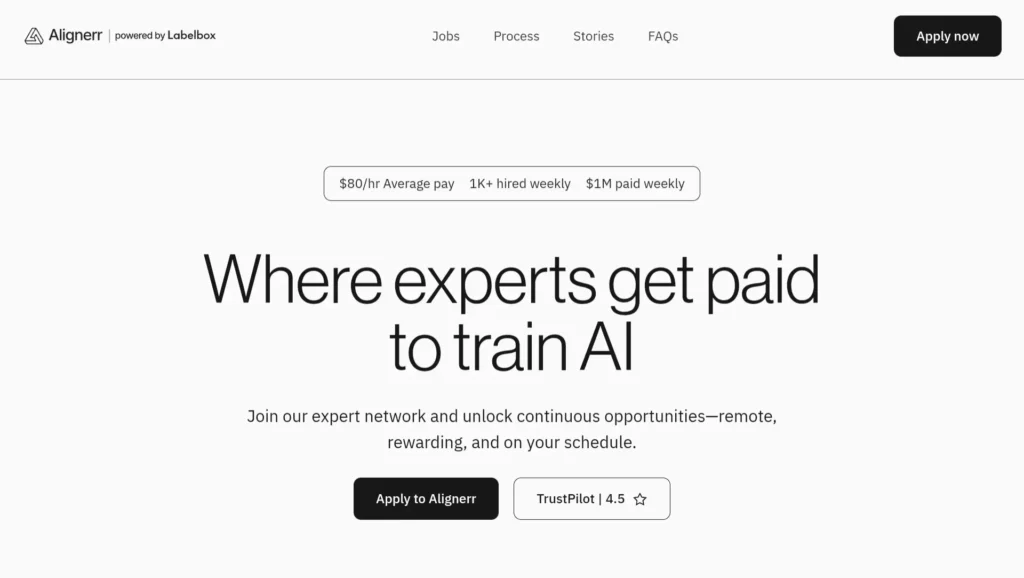
It surprises many people how Alignerr AI works differently. Unlike traditional job interviews where you sit with a human recruiter on Zoom or Google Meet, Alignerr uses an AI interviewer called Zara to conduct the interview process.
At first, it can be strange finding yourself talking to artificial intelligence instead of a real person for the first time. This can lead to doing many mistakes during the AI interview and losing a real passive income opportunity.
After going through the process myself, I realized the interview is really designed to test how clearly you communicate, how confident you sound, and how well you explain your experience. Learning a few important tips and avoiding some fatal mistakes can help you ace almost any Zara interview on AI training platforms, including Alignerr AI, which is exactly what I’m going to help you with in this post.
What Is AI interview and why Alignerr Uses It?
Alignerr AI interview is an interview you do live with an AI interviewer which mainly focuses on your professional background, your communication skills, and your ability to explain concepts in detail. The AI interviewer continuously asks follow-up questions based on your answers, which means the AI is actively analyzing your responses just like a human recruiter instead of simply reading a script.
One important thing to understand is that the interview is recorded for possible human review. Your camera, microphone, and speaker must all work properly before the interview begins. So make sure to be comfortable with that.
This process could be confusing for some people but it seems like that this is the direction that companies are rapidly moving towards. Nowadays, companies are choosing AI-powered recruitment systems because they save time and help standardize the hiring process. Instead of hiring many interviewers to handle thousands of applicants applying at the same time, Alignerr uses Zara AI to cut costs while every candidate gets a similar structure, making the evaluation process more balanced.
With the extensive popularity that AI training platforms have been getting, it seems like AI interviews is a lifesaver allowing companies like Alignerr to process large numbers of candidates while still evaluating communication quality, technical knowledge and approving people with valuable skills.
What to Expect Before Starting the Interview
Accuracy matters when setting up your profile on Alignerr. Use your real professional information because your interview responses should align with the experience listed in your profile and resume. If there’s inconsistency between your profile and your interview answers, it could affect credibility and lower trust rates.
After you sign in, Alignerr will redirect you to your dashboard where you can start the AI interview. Expect that the platform will request permission for your camera, microphone, and speakers. You must allow all permissions. If you deny one accidentally, the interview may not start correctly.
Doing the interview on browser is way better than mobile. If you are having trouble with permissions, it’s likely because you must close all tabs to get started.
After permissions, the system tests your webcam quality. Make sure your face is visible and properly lit. Think of it like attending a professional online meeting. If your room is dark or noisy, it can create a poor quality which leads to rejection.
The microphone and speaker test are equally important. Zara speaks during the interview, so if your speakers are not functioning, you may miss questions. Likewise, unclear microphone audio can make your answers difficult for the AI to process accurately.
One thing I noticed is that the process feels smooth if your internet is stable. But if your connection fluctuates, the system can freeze or disconnect temporarily. That’s why using reliable Wi-Fi or wired internet is strongly recommended before beginning.
The best approach is treating the setup process like preparing for an actual online interview. Every small technical detail matters because technical problems can interrupt your concentration and confidence during the interview.
My Actual Experience With Zara AI Interview
When the interview officially started, Zara introduced itself professionally to me. At first, the experience felt unusual because there was no human face reacting emotionally to my answers. Still, after a few minutes, the conversation became surprisingly natural. Zara asked structured questions while also responding intelligently to what I said.
The first question focused on my most recent work experience. Zara asked me to explain my role as an English teacher and describe specific methods I used to manage classrooms. One thing I quickly realized is that the AI prefers detailed explanations instead of short responses. Whenever I gave a brief answer, Zara immediately asked follow-up questions requesting more depth.
For example, after mentioning that I used hands-on activities to teach English, Zara asked exactly what activities I used and how I measured success. This is where many candidates might struggle because the AI expects clarity and examples. Instead of panicking, I explained my methods in detail showing professionalism and expertise in my area.
Another thing I noticed was how the AI paid close attention to technology usage. When I mentioned Google Classroom, Zara became very interested and asked how I integrated online learning into English teaching.
The conversation continued naturally from one topic to another just like any online interview with a human recruiter. The key to surviving is confidence when speaking. You do not need perfect grammar or AI style answers. Instead, focus on sounding clear, organized, and thoughtful.
7 Strategies To Pass Alignerr AI Interview
Choose One Domain
Alignerr AI cares about understanding what you are specifically good at. You can’t just apply to every project out there hoping to make more money. The platform needs to sort applicants, analyze their profiles, and match them to projects that fit their actual skills and experience.
Let’s be real, you can’t be everything. That’s why you should choose one clear domain or area of expertise to present yourself in. For example, if your strongest experience is in UI/UX design, represent yourself as a UI/UX designer instead of listing unrelated roles like social media designer, clothing designer, and infographic designer all at once. Avoid uploading a resume stuffed with random, unrelated job titles. Stick to one professional identity while clearly highlighting your level of experience and expertise.
Don’t Memorize Scripts
One thing that really helped me pass the Alignerr interview was treating it seriously instead of jumping into it unprepared. I spent days preparing before taking the interview. I looked through the available projects in my domain, studied the descriptions and requirements, then used AI to generate possible interview questions.
All I did was upload my resume to ChatGPT and ask it to generate questions based on those projects.
I also prepared my setup just like I would for the actual interview and recorded myself answering the questions on camera. On top of that, I prepared real-world examples from my previous work and explained the outcomes to make my answers stronger and more believable.
That said, I’m not telling you to memorize scripts word for word. The questions can be unexpected and completely different from what you prepared. The goal is simply to get comfortable explaining your work clearly, organizing your thoughts, and giving structured answers that won’t confuse Zara during the interview.
Prepare Setup Before the Interview Starts
Another critical mistake is ignoring the importance of preparing setup and testing equipment. Start by preparing your environment. Choose a quiet room with minimal background noise. Turn off notifications on your devices and close all tabs.
Good lighting also helps your camera appear clearer, which creates a stronger professional impression. Make sure your microphone is working properly and your voice is clear. Even though you are talking to AI, having a echoey or muffled voice and blurry camera can lead to rejection.
Speak Slowly and Use Simple Language
Some candidates also the mistake of speaking too fast. This is more common than it seems, especially when people are nervous. The issue is that speech recognition systems rely heavily on clarity. When words are rushed together, important details can be lost or misinterpreted. Speaking at a steady pace while maintaining constant eye contact with the camera helps the system accurately capture your answers and also makes you sound more confident.
You don’t have to sound perfect and your vocabulary be on point. Practice explaining your work to someone outside your field. If they can understand your explanation easily, you’re probably communicating effectively enough for the AI interview as well. Only use technical language when necessary and you are able to explain clearly.
Give Detailed Answers
One common pattern I noticed was that Zara would start with a broad question, then gradually drill deeper into the details based on your answer. That’s why you need to be able to explain your work precisely and confidently to showcase your expertise. Giving very short answers or simply repeating what’s already written on your resume won’t work here. Instead, explain your experience in enough detail to demonstrate your knowledge, problem-solving abilities, and communication skills.
When I explained how students struggled with Grammar, I didn’t stop there. I described how I organized additional online sessions, created simplified notes, and used easy-to-hard examples to make it easier to understand. Then I explained the outcome that students became more confident, and improved their grades.
That level of detail matters because it shows initiative and problem-solving ability. Even if your profession is not education-related, the principle remains the same: Alignerr wants to see how well you explain processes and solve challenges.
Use Real-world Examples
I can’t stress enough how important it is to use real-world examples when answering interview questions. Sharing examples from your previous work experience shows that you’re not just trying to fake your way into AI training projects, but that you actually have real practical experience and valuable skills to offer.
During my interview, Zara did not seem interested in memorized answers. Instead, the questions focused on how I handled real situations and solved actual problems. My strategy for answering questions was to start with a brief direct answer, support it with a real example, then finish by mentioning the practical result or outcome.
Try giving examples that demonstrate measurable impact. If you helped improve productivity, increased engagement, solved communication problems, or improved results in any way, explain exactly how you did it, and don’t just list a bunch of job duties.
Mention Things You Only Know
The follow-up questions are where the interview becomes challenging. Many people can answer broad introductory questions, but follow-up questions require deeper thinking and consistency.
The AI evaluates whether your answers genuinely connect together logically. If your responses are inconsistent or shallow, it becomes noticeable quickly. So, do not mention technologies or experiences you cannot confidently talk about in detail. If you mention a skill, tool, or project, expect Zara to ask deeper questions about it.
One useful technique is pausing briefly before answering difficult follow-up questions. There’s no need to rush. A thoughtful response sounds more confident than a hurried one.
Another important thing is staying calm if the AI interrupts or repeats itself. Sometimes technical delays or processing pauses can make the interaction feel slightly awkward. Don’t let that throw you off mentally.
How I Used Final Round AI to Practice for My Interview
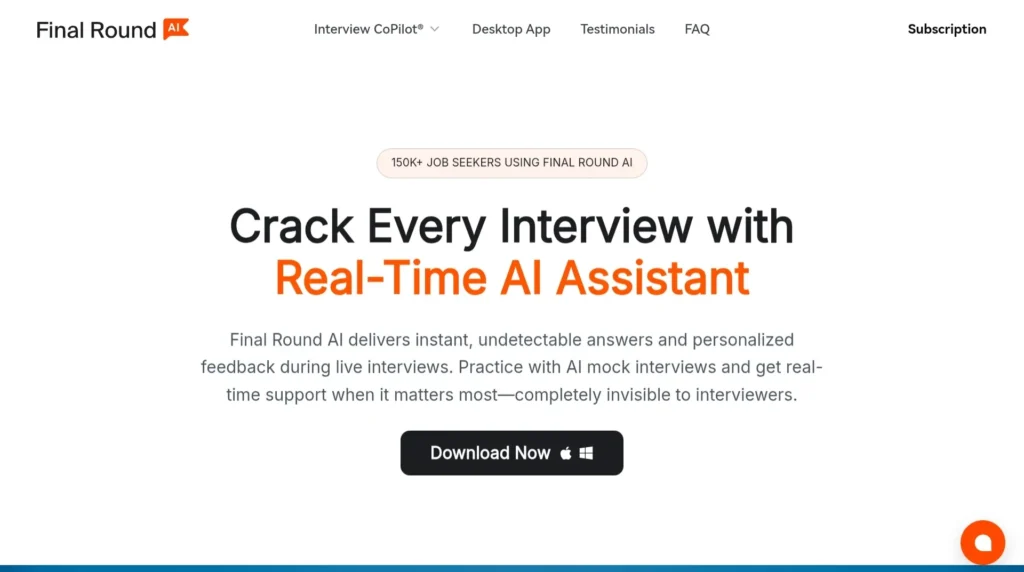
The single most effective part of my preparation for Alignerr interview was participating in mock interviews, particularly on platforms built to imitate real AI interview environments like Final Round AI.
Final Round AI recreates the actual interview atmosphere. The experience felt very similar to the real Alignerr process, with a live camera setup, limited response time, and an AI system evaluating both communication style and answer quality.
One feature that stood out was the detailed performance feedback after each session. The platform analyzed different aspects of my communication, including answer structure, clarity, and whether my responses were too long or too short. The feedback wasn’t generic either, it highlighted repeated habits and pointed out where my explanations became unclear or unfocused.
I also appreciated the AI scoring system because it gave me a realistic sense of how automated interviews might assess candidates. Rather than wondering if an answer sounded good, I could actually see measurable results and track my progress over time. That made it easier to improve quickly by adjusting weak areas and practicing repeatedly in a structured way.
Another thing I didn’t expect was how useful the recordings were for improving body language and presentation. Watching myself answer questions made me aware of habits I hadn’t noticed before, like inconsistent eye contact with the camera or touching my face a lot.
Looking back, mock interviews were one of the most important parts of my preparation. They helped me move beyond simply knowing the right answers and taught me how to deliver them effectively under realistic interview conditions.
What Happens After Completing the Interview
Once the interview ends, the system automatically closes the session and returns you to the Alignerr dashboard. At this stage, you will not receive immediate results. Instead, the platform processes your interview and evaluates your responses.
From my experience, the dashboard may show the interview as completed or under review. This is normal. After that, candidates typically wait for an email notification or a dashboard update regarding the next steps.
Depending on the evaluation outcome, you may be assigned a skill assessment, invited for additional screening or considered for job matching opportunities.
During the waiting period, it is a good idea to keep checking your email and dashboard periodically. However, there is no need to repeatedly refresh or stress over immediate feedback. These systems often take time to process large numbers of candidates. You just need to be patient.
Final Thoughts on Passing the Alignerr AI Interview
The Alignerr AI interview is not designed to trick candidates. Instead, it is structured to evaluate how clearly and effectively you communicate your experience. Once you understand that, the entire process becomes much easier to navigate.
The biggest factor in success is preparation. Not memorization, but preparation of ideas, examples, and structured explanations. If you can clearly describe what you’ve done, how you did it, and what results you achieved, you are already in a strong position.
The second most important factor is communication style. Speaking clearly, staying structured, and avoiding overly short answers significantly improves performance. Think of each response as a mini story rather than a simple reply.
Finally, confidence and calmness matter more than most people expect. Even when technical issues arise or follow-up questions become deep, maintaining steady communication helps the interview flow smoothly.
Overall, the experience feels like a modern approach to hiring where clarity, adaptability, and digital fluency matter as much as technical expertise. If you approach it with the right mindset, it becomes less of an obstacle and more of a structured conversation about your skills and experience.
